Forward Deployed EngineerFDESoftware Engineering CareerTech JobsClient-Facing EngineerEnterprise Software
Forward Deployed Engineer (FDE): A Complete Career Guide
What is a Forward Deployed Engineer (FDE)?
In the evolving landscape of tech roles, a unique position has gained significant traction: the Forward Deployed Engineer (FDE). Originally popularized by data analytics giants like Palantir and now heavily adopted by modern enterprise SaaS startups, the FDE sits at the critical intersection of core product engineering and direct customer interaction.
As enterprise software becomes more complex, simply handing over a login credential isn't enough. Customers need deeply integrated, customized solutions that work seamlessly with their existing infrastructure. This is where the Forward Deployed Software Engineer steps in to ensure technical success.
The Core Role of a Forward Deployed Software Engineer
A Forward Deployed Engineer is fundamentally a software engineer who operates on the 'front lines' with customers. Unlike traditional software engineers who might rarely interact with the end-users of their products, FDEs spend a significant portion of their time working directly with clients. Their goal is to understand unique business problems, integrate the core product into the client's environment, and build custom software extensions when necessary.
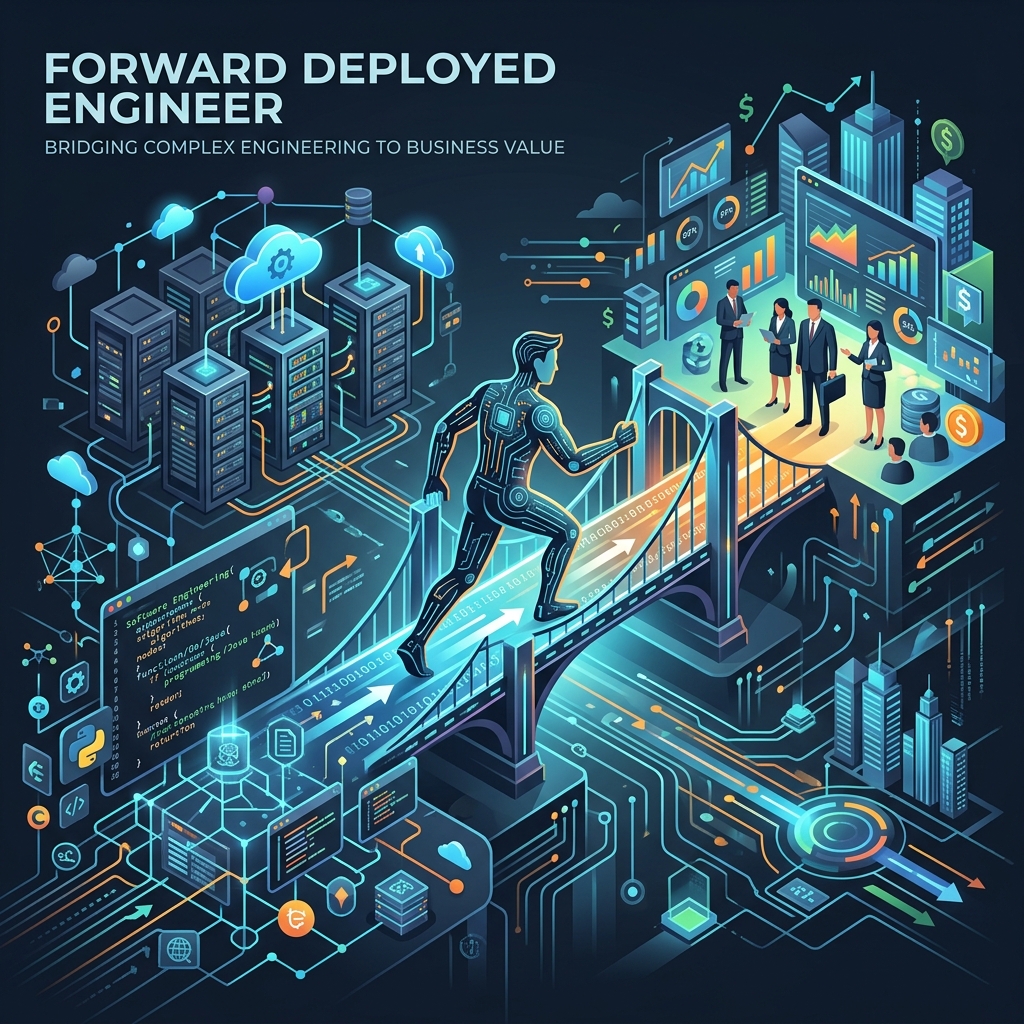
They serve as the technical face of the company, acting as a critical translator between high-level business requirements and low-level technical implementation.
Key Responsibilities of an FDE
The day-to-day work of an FDE can vary wildly, which is a major draw for adaptable developers. Core responsibilities typically include:
- Complex Integrations: Deploying the company's software within the customer's often complicated legacy systems or cloud environments.
- Custom Engineering: Writing glue code, automation scripts, and occasionally core product features to ensure the solution meets the specific needs of the customer.
- Technical Problem Solving: Acting as the highest tier of technical support during the deployment phase, debugging issues live in the customer's production environment.
- Product Feedback Loop: Funneling critical, real-world product feedback and feature requests back to the core engineering and product management teams.
- Stakeholder Management: Communicating technical concepts to non-technical client stakeholders (like CEOs and Directors) to ensure project success.
Forward Deployed Engineer vs. Traditional Software Engineer
While both roles require strong coding capabilities and computer science fundamentals, their focus areas differ drastically:
Traditional Software Engineer:
- Focuses on long-term software architecture, scalability, and maintainability.
- Works primarily with internal teams (Product Managers, Designers, other Engineers).
- Success is measured by code quality, timely feature delivery, and system performance.
- Work is usually highly structured through agile methodologies (sprints, long-term roadmaps).
Forward Deployed Engineer (FDE):
- Focuses on immediate problem resolution, system integration, and time-to-value for the customer.
- Works directly with external clients, often on-site or via constant remote communication.
- Success is measured by customer satisfaction, successful enterprise deployments, and revenue impact.
- Work is highly dynamic and context-dependent, shifting rapidly based on urgent customer needs.
Essential Skills for a Forward Deployed Engineer
To thrive as a Forward Deployed Engineer, you need a rare hybrid profile of technical chops and soft skills:
- Broad Technical Knowledge: You might need to write Python scripts one day, debug a Kubernetes cluster the next, and optimize a complex SQL query after that. Full-stack versatility is key.
- Exceptional Communication: You must be able to explain complex technical issues to business executives just as effectively as you can discuss API architecture with another senior developer.
- Empathy and Patience: Enterprise customers will face integration frustrations. You need the emotional intelligence to navigate tense situations, manage expectations, and build trust.
- Rapid Context Switching: You'll often balance multiple client deployments or technical issues simultaneously. The ability to quickly dive into a new codebase or problem space is crucial.
Is the FDE Career Path Right for You?
The Forward Deployed Engineer role is perfect for developers who love coding but feel isolated when hidden behind a screen all day. If you enjoy business strategy, relationship building, and seeing the immediate real-world impact of your code on a client's operations, being an FDE can be an incredibly rewarding tech career.
However, if you prefer deep, uninterrupted focus on long-term architectural problems, or if dealing with client demands and shifting project priorities stresses you out, a traditional software engineering route might be a much better fit.
The Future of Forward Deployed Engineering
As enterprise technology—especially in AI, machine learning, and big data—continues to grow in complexity, the gap between a great product and successful implementation widens. Forward Deployed Engineers are the essential bridge across that gap. They represent an exciting evolution in the tech industry: a role that proves that elite engineering isn't just about writing code; it's about solving real human and business problems.